June 29, 2026
In flash lamps, high-voltage ignition systems, and pulse power applications, one small component is often overlooked—the trigger transformer. It does not operate continuously. Instead, it delivers a short-duration high-voltage pulse only when needed. However, the stability and repeatability of that pulse directly determine whether the entire system operates reliably.
If the trigger pulse is unstable, a xenon flash lamp may fire late, a high-voltage switch may fail to turn on, or the entire Pulse Forming Network (PFN) may fail to discharge. Troubleshooting these problems can be time-consuming, and the root cause is often traced back to this seemingly simple trigger transformer.
A trigger transformer is, in essence, a specialized pulse transformer designed for short-duration, high-voltage operation. It converts a low-voltage input (typically ranging from tens to several hundreds of volts) into a high-voltage pulse with a duration on the order of microseconds to milliseconds, with output amplitudes reaching several kilovolts or even higher.
Such high-voltage pulses are used to initiate conduction in devices such as gas discharge tubes, flash lamps, vacuum-triggered switches (TVS), and thyristors, among others.
Unlike continuously operating power transformers, the key performance criteria of a trigger transformer are not efficiency or power-handling capability, but rather:
In pulsed power systems, the reliability of the trigger transformer is directly linked to whether the main circuit can be safely and correctly turned on. It serves as a critical high-to-low voltage isolation component within the PFN (Pulse Forming Network) discharge circuit, and its performance has a direct impact on the safety and reliability of the overall discharge process.
Pain Point 1: Unstable Flash Lamp Triggering
Insufficient trigger pulse amplitude or waveform distortion can prevent complete ionization of the gas inside the flash lamp. This may result in misfires, uneven luminance, or timing deviation of synchronization signals.
Key attention should be paid to both the open-circuit output voltage and the loaded output waveform of the transformer. The pulse rising edge should be sufficiently steep (sub-microsecond level) to ensure rapid and synchronized ionization of the lamp.
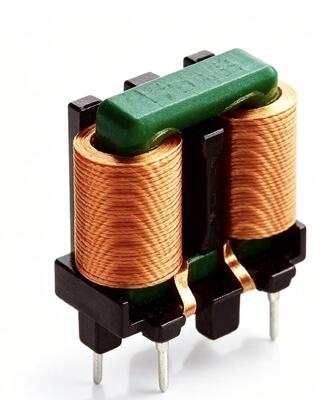
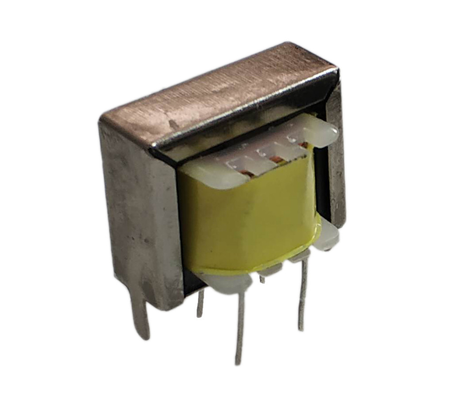
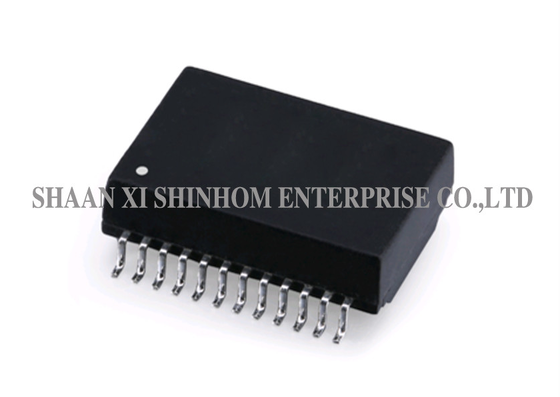
The SHINHOM TCB series (TCB1006-502) adopts a compact magnetic core design combined with potting encapsulation technology. This structure enables a compact footprint while delivering high-voltage output without corona discharge, making it suitable for integration into compact flash modules or ignition systems.
Pain Point 2: Trigger Failure in High-Voltage Switching Devices
The conduction of vacuum trigger switches (TVS) depends on the formation of an initial plasma. If the trigger pulse is insufficient in either energy or voltage, the small gap between the trigger probe and the cathode may fail to break down. As a result, the main gap will not conduct, causing the PFN (Pulse Forming Network) discharge circuit to fail to operate correctly.
The trigger transformer must be capable of providing adequate trigger voltage (e.g., >3 kV) as well as sufficient trigger energy In addition, the dielectric isolation rating between the primary and secondary windings must meet relevant safety standards to prevent high-voltage back-feeding into the low-voltage control circuitry.
The SHINHOM high-frequency transformer platform supports customization of turns ratio, insulation grade, and pulse energy requirements. The TCB series offers multiple turns ratios and packaging configurations, making it suitable for a wide range of trigger scenarios across different voltage levels.
| Application Scenario | Key Requirements | Key Parameters to Focus On | SHINHOM Series |
|---|---|---|---|
| Flash / Strobe Lamp | High voltage, steep rising edge, compact size | Open-circuit output voltage, rise time, physical dimensions | TCB series |
| Vacuum Trigger Switch (TVS) Triggering | High trigger voltage (>3 kV), sufficient energy (>1 J) | Output voltage, pulse energy, insulation withstand voltage | Custom high-frequency transformer |
| Thyristor / SCR Triggering | Matched pulse width and adequate gate drive capability | Turns ratio, pulse width, gate drive current | Custom trigger transformer |
| Compact PCB Integration | Small footprint, SMD or low-profile through-hole package | Package dimensions, mounting style | TCB series, customized solutions |
Although trigger transformers are typically small in size, they play a critical role in high-voltage pulsed power systems. Improper selection may lead to triggering failure, waveform distortion, or overall system instability, often resulting in difficult troubleshooting and high corrective costs.
The SHINHOM portfolio includes both standard TCB-series trigger transformers and customized high-frequency transformer solutions, covering a wide range of pulsed applications such as flash lamps, high-voltage switch triggering, and thyristor gate drive circuits.
For accurate model selection or pulse waveform validation, it is recommended to provide key application parameters, including input voltage, required output voltage, pulse width, and load type. This allows for precise design matching and ensures optimal triggering performance in the target system.